PROJECT DESCRIPTION
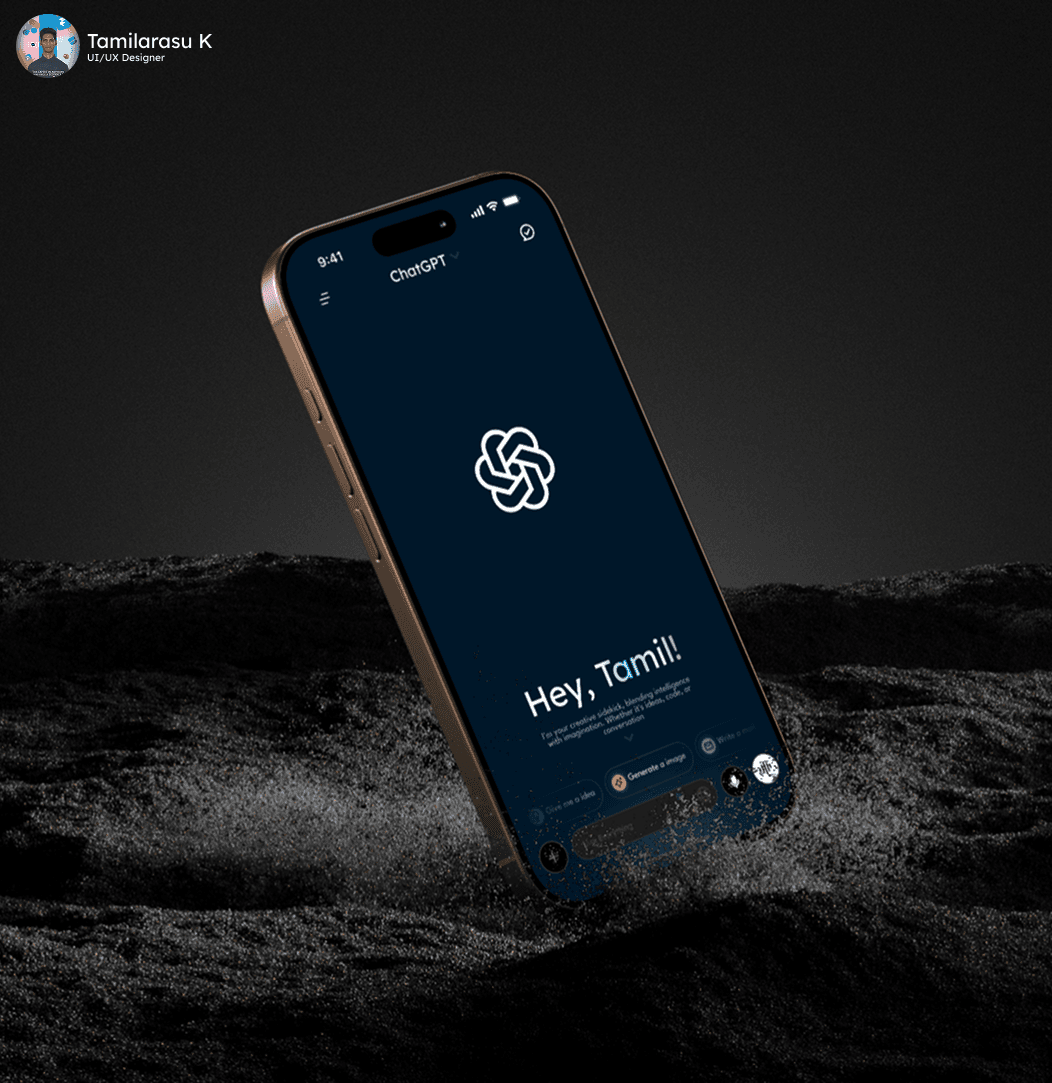
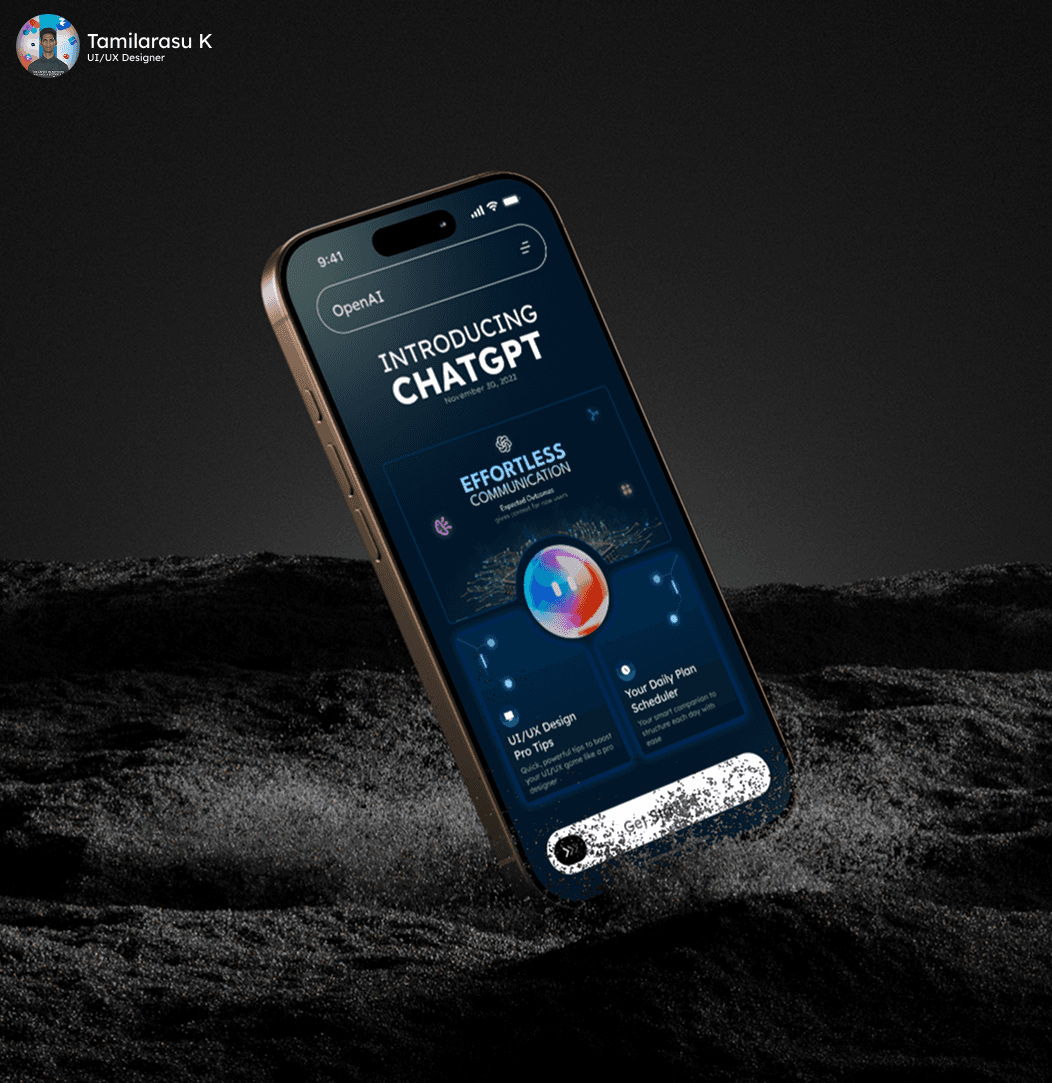
The redesigned ChatGPT user interface represents a thoughtful reimagination of the platform’s visual and emotional experience, going beyond mere aesthetics to infuse soul and personality into the interaction. The creator focused on two core screens: the Intro Screen and the Home Screen, each crafted to enhance user engagement and emotional connection. The Intro Screen serves as a welcoming gateway for new users, replacing generic onboarding with a stylish, well-structured layout that clearly communicates key features and sets a warm tone from the first interaction. It emphasizes clarity, visual appeal, and intuitive navigation to improve the initial user journey. The Home Screen takes personalization to the next level by greeting users by name—such as "Hey, Tamil!"—creating an immediate sense of familiarity and warmth. Its design is minimalistic yet emotionally rich, balancing clean lines with expressive elements that make the interface feel alive and human. Compared to the current ChatGPT UI, which prioritizes functional simplicity and speed (rated around 6.5–7/10), this redesign introduces depth through personality, emotional resonance, and refined visual storytelling. The result is a more immersive, engaging, and personable experience that users may perceive as more human-like. Notably, the redesign received a self-evaluation score of 9 out of 10 from ChatGPT, highlighting its effectiveness in elevating the user experience. The creator now invites feedback on whether this new design successfully bridges the gap between machine and human interaction, asking the community if it feels more relatable and emotionally intelligent.
OBJECTIVE
Enhancing onboarding clarity for new users.
Introducing personalized interactions (e.g., name-based greetings).
Infusing personality and emotion into the design.
Making ChatGPT feel less like a tool and more like a thoughtful digital companion.
CHALLENGES
Balancing Simplicity and Emotion
The original ChatGPT UI is praised for its clean, distraction-free design. Adding emotional depth without cluttering the interface or sacrificing usability was a major challenge.Avoiding Over-Personalization
While personal touches (like “Hey, Tamil!”) add warmth, there was a risk of making the experience feel intrusive or gimmicky if not executed authentically.Maintaining Brand Consistency
Introducing a “soulful” aesthetic had to align with ChatGPT’s core identity—intelligent, helpful, and professional—without veering into overly playful or unprofessional territory.Designing for Emotional Resonance Without Animation or Voice
Since the platform is text-based and static, evoking emotion relied entirely on visual hierarchy, microcopy, typography, and layout—a significant design constraint.Subjectivity of “Soul”
“Soul” is abstract and subjective. Translating this concept into tangible UI elements required intuitive design decisions backed by emotional intelligence.
DESIGN PROCESS
Defining the Emotional Tone
Chose a tone that is friendly, supportive, and intelligent—like a trusted friend who’s also highly capable.
Used warm colors, soft contrasts, and conversational microcopy to reflect this tone.
Wireframing Key Screens
Focused on two critical touchpoints:
Intro Screen: Designed to welcome and guide new users with clear sections (e.g., “What You Can Do,” “Get Started,” “Tips”).
Home Screen: Centered around a personalized greeting and a clutter-free layout that prioritizes recent chats and quick actions.
Incorporating Personalization
Integrated dynamic name greetings to create an immediate sense of recognition.
Used subtle visual cues (e.g., rounded corners, expressive icons) to soften the interface.
Visual Refinement
Selected a modern, readable typography with emotional nuance.
Applied a visually rich but minimal color palette to maintain focus while adding depth.
Ensured accessibility and responsiveness across devices.
Validation & Feedback Loop
Shared the design with ChatGPT for self-evaluation (humorously noted as giving it a 9/10).
Opened the design to community feedback to assess perceived humanity and engagement.